
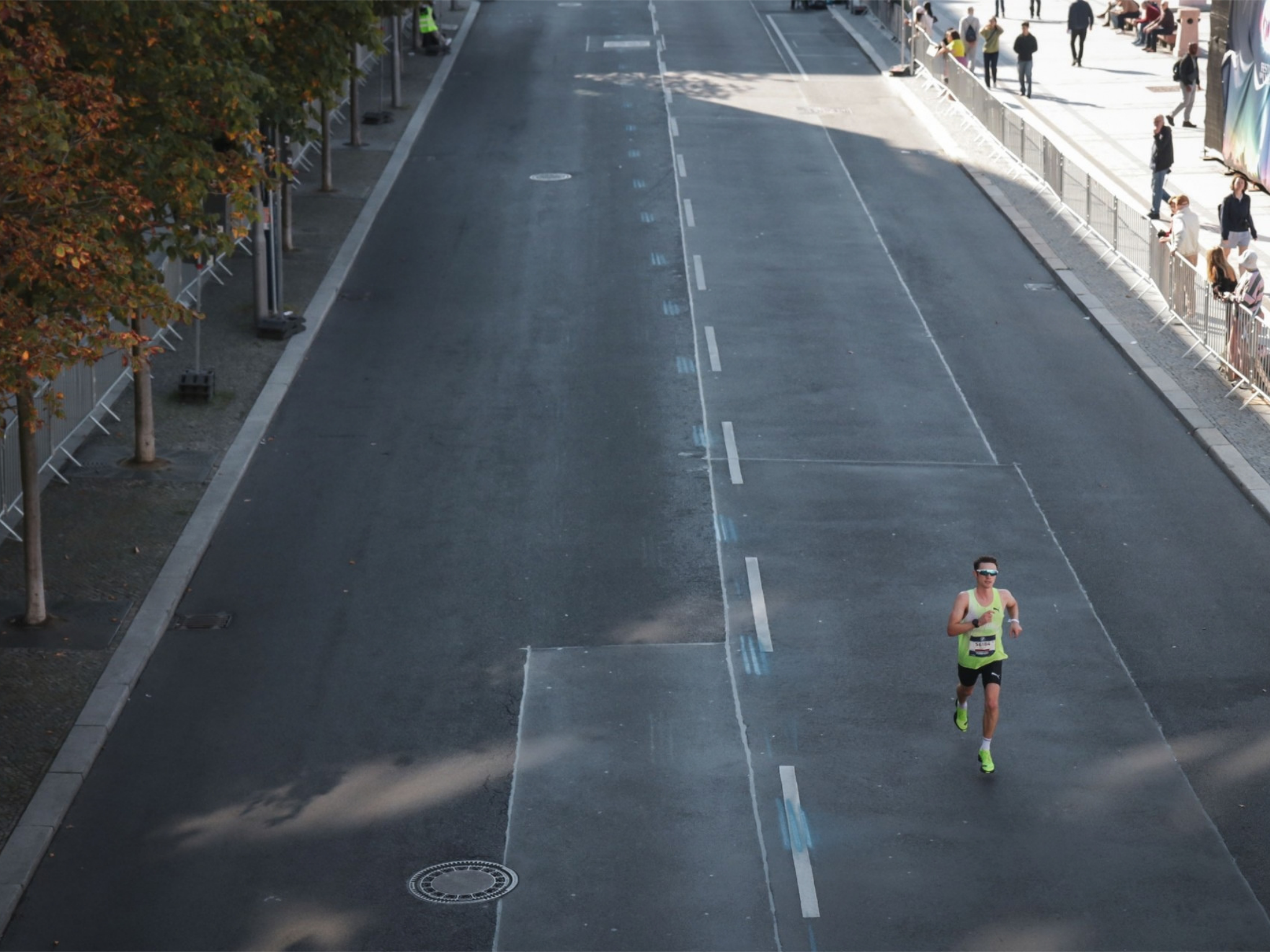
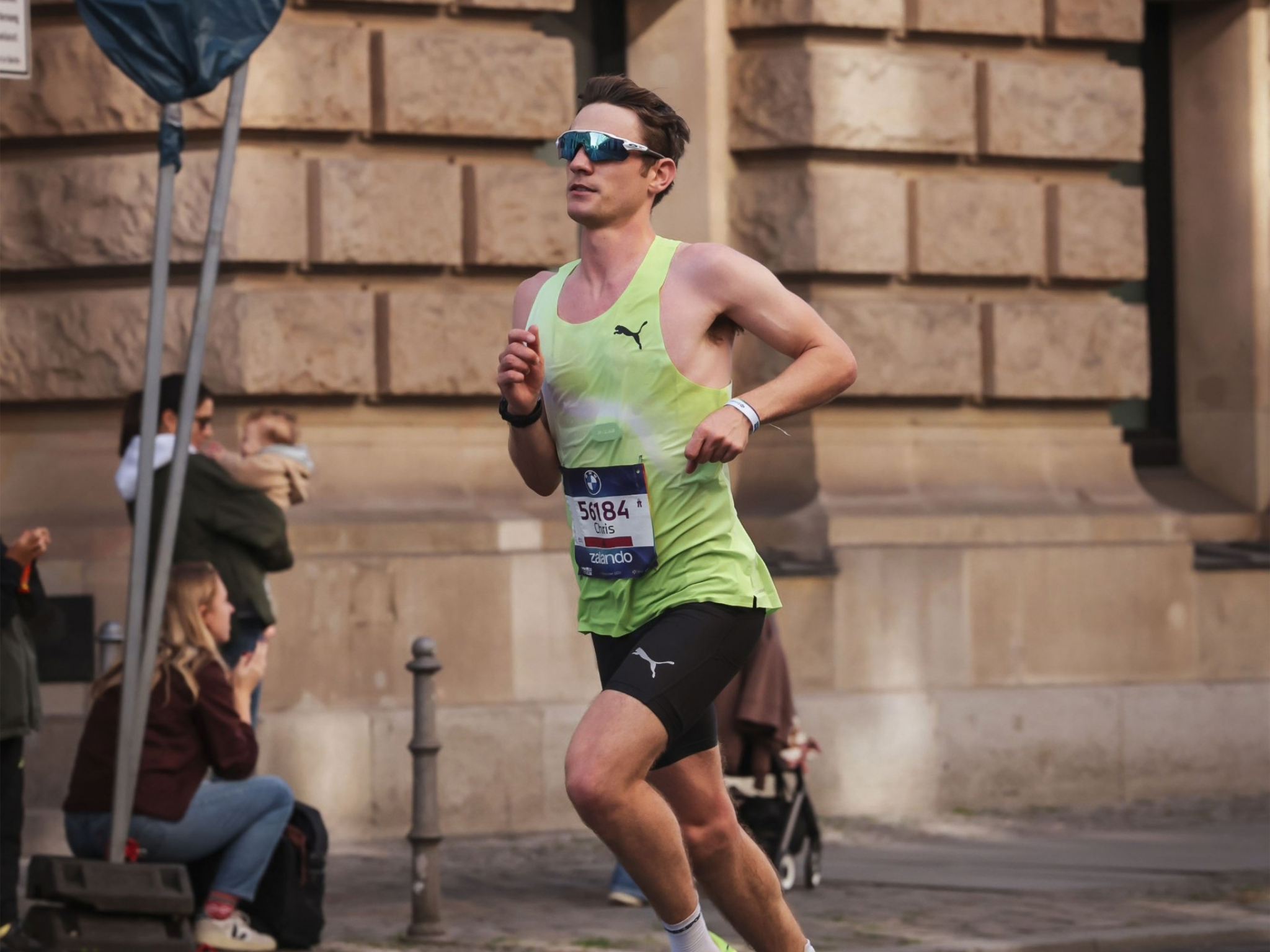
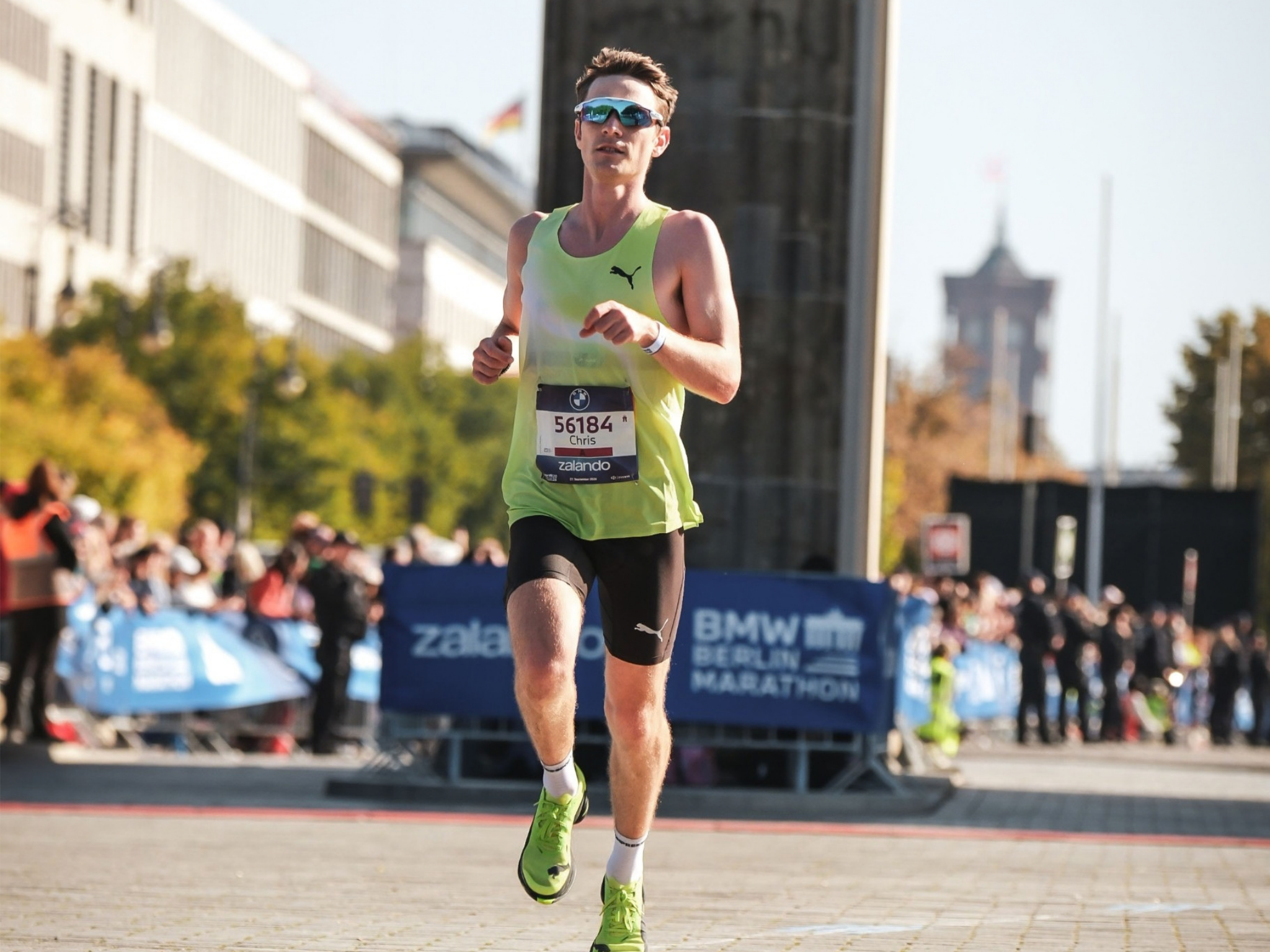
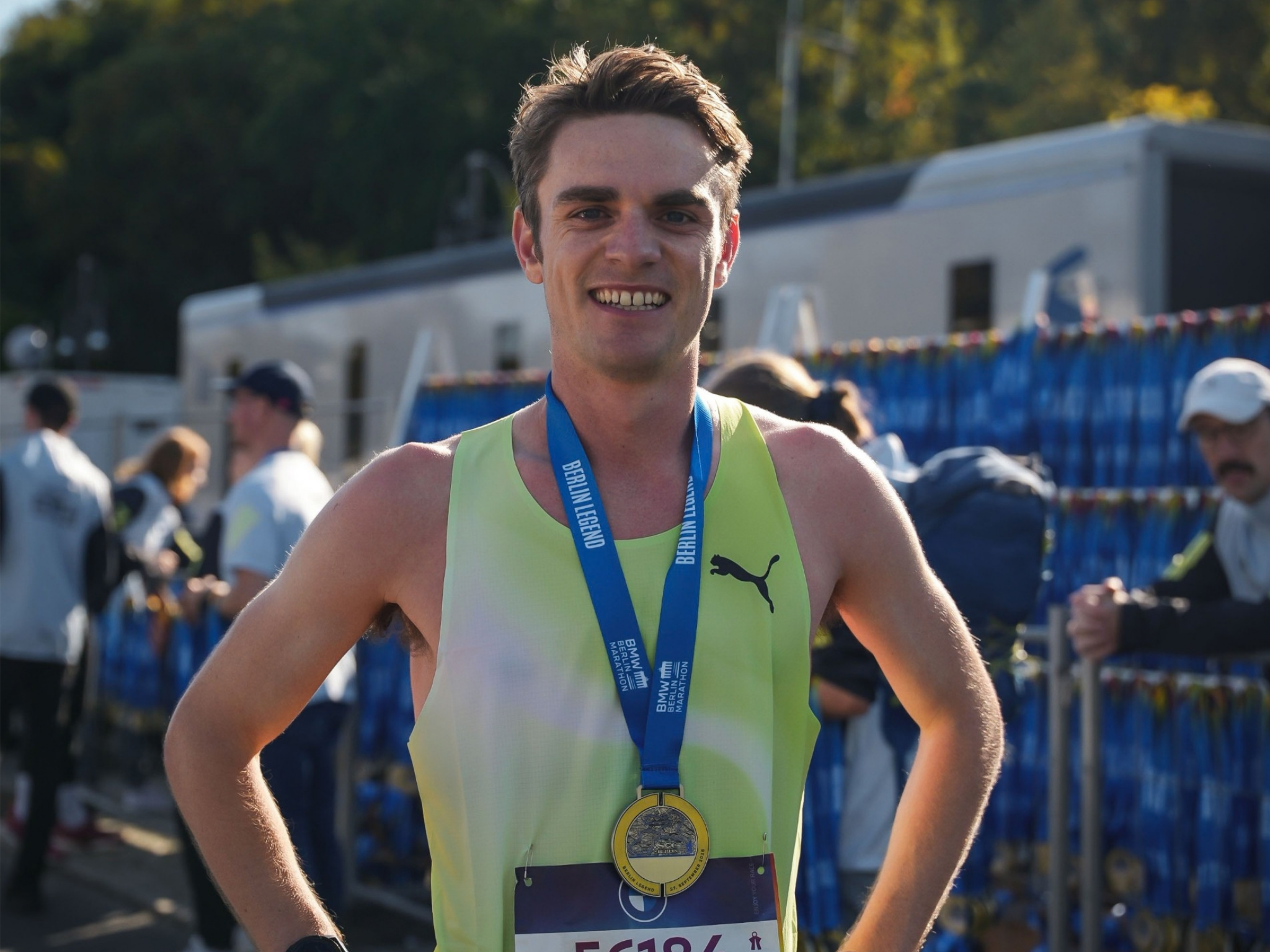
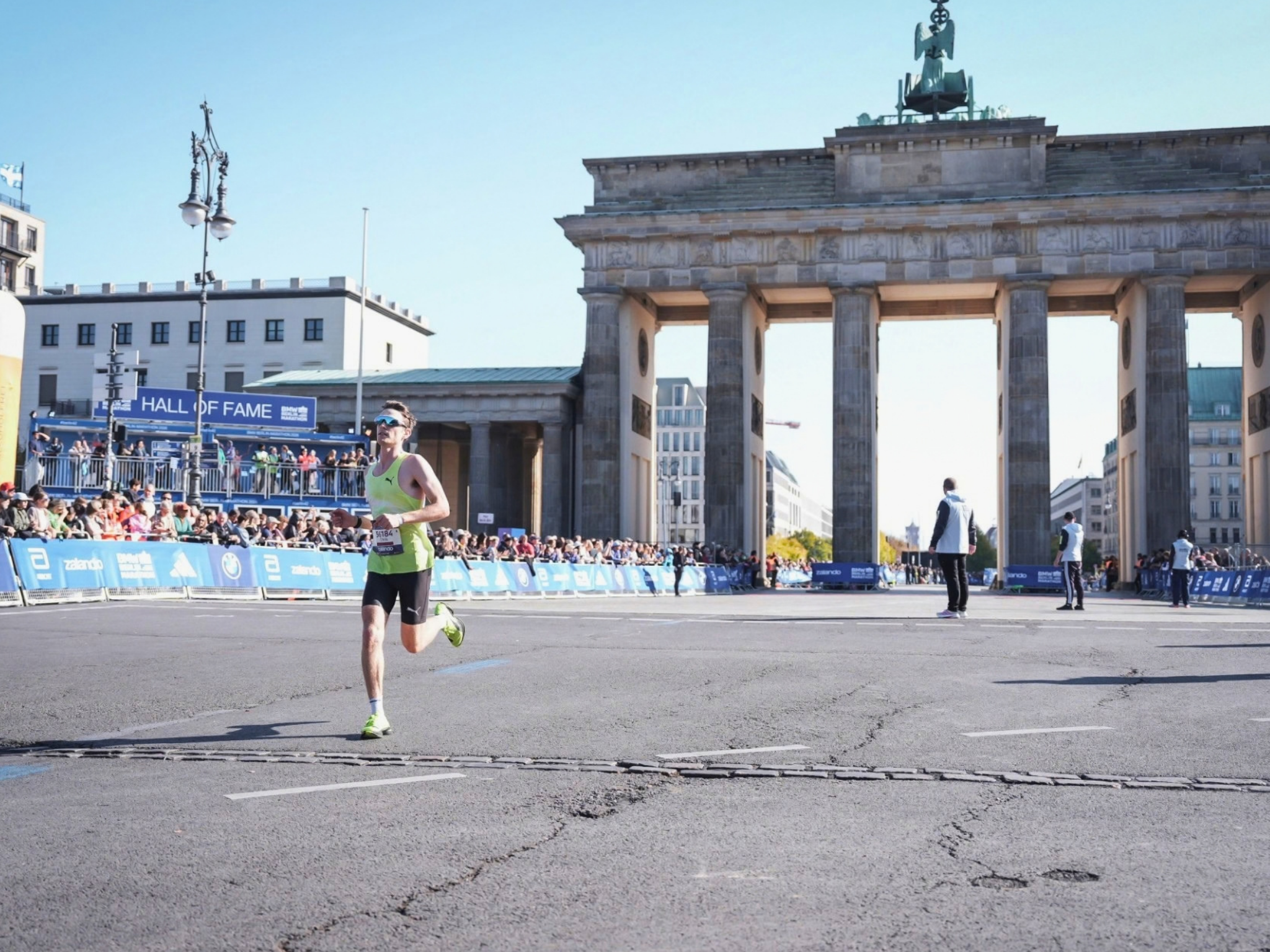
Flt Lt Chris Davies made his mark on RAF sporting history with a remarkable performance at the Berlin Marathon on Sunday 27 September. His exceptional time of 2:17:24 saw him smash more than two minutes off his previous personal best and deliver the fastest marathon by an RAF athlete in almost 30 years.
He surpassed Ben Livesey’s 2:17:44, set at the 2014 London Marathon, moving into second place in the RAF marathon record books behind Mark Flint’s 2:15:44, recorded in London in 1997. Nearly three decades on, Flint’s long-standing record is now firmly within reach.
Alongside his role as Assistant Military Advisor to the Chief Digital and Information Officer, Chris has built his marathon training around life in the RAF. We caught up with him to hear more about his journey:
“I’ve always been active, playing football from a young age. My father was in the RAF and had run before taking up triathlon, so I was introduced to endurance sport early on. I started triathlon when I was about 12 years old, whilst also running cross-country at school.
I competed in triathlon for several years, including within the RAF, but eventually felt I’d achieved most of the goals I’d set myself. Running had always been my strongest discipline, so during a deployment in 2023, I decided to focus solely on that.
This led to my first London Marathon in 2024, where I ran a sub-two-and-a-half-hour marathon, finishing in 2:28. Since then, I’ve really fallen in love with running. I enjoy its simplicity and the tangible rewards of hard work – the more I’ve put in, the better I’ve become.
After breaking 2:20 for the first time at the London Marathon earlier this year, I stepped up my training ahead of Berlin. For the first time, I’ve had several weeks where I’ve run more than 100 miles. A lot of that mileage comes from commuting to work. I currently work at MOD Main Building and live about seven miles away, so it’s a great commute for running – and often easier than navigating the London commuting scene anyway!
I’ll typically fit in a couple of quality sessions during the week, including training with a fast group of runners around Battersea Park, followed by a longer run at the weekend. I run around nine or ten times a week, fitting sessions around my RAF commitments, often in the mornings and evenings. My work has been really supportive in giving me opportunities to train, which makes a big difference. However, I’m disciplined about fitting training around work rather than letting it interfere with my commitments. Managing that training load takes more than just finding the time to run. Sleep, nutrition and recovery are just as important as the running itself. At this level, you need to look after yourself and recover properly to be ready for the next session.
When it comes to the final few kilometres of a marathon, my mindset has varied between races. In previous marathons, I’ve been fairly relaxed and haven’t always felt like I was racing all the way. Berlin was different. I’d set myself a target of 2:18 and was determined to achieve it.
When my partner told me at halfway that I was slightly behind target, I knew I had to start digging in. Normally, I like to take in the race, the scenery and the crowds, but this time I was focused on pushing all the way to the finish. Luckily, my second half was around a minute quicker than my first, and I started overtaking a lot of the elite runners towards the end. That gave me a real boost when I was hurting and helped me keep going.
My next goal is a bit of a change of direction, as I’ll be competing in the Marathon des Sables in April. The race is one of the world’s best-known desert ultramarathons, covering around 250km across the Moroccan Sahara over multiple stages, with competitors carrying their own food. It’s always been a bucket-list race for me, and when the opportunity came up to take part next year, I couldn’t turn it down. After that, I’ll return to more traditional marathon running and look to see how close I can get to the all-time RAF record!
For anyone thinking about running their first marathon, the one piece of advice I’d give them is not to be put off by how daunting it can feel. You’re not going to enjoy every step or hit every training session perfectly. The key is consistency across the whole training block, rather than worrying about one bad session or one missed run. Trust the process and the work you’ve put in. On race day, just enjoy it. Completing your first marathon is a huge achievement in itself, so don’t lose sight of that while chasing a time.
I’ve received support from the RAF Central Fund every year and am incredibly grateful for the grants they’ve given me throughout my sporting career. Their support has made a real difference in allowing me to continue competing and developing as an athlete, particularly alongside my RAF commitments. I’m very grateful to have that backing and for the opportunities it has helped provide.”
Inspired by Chris’s story? Whether you’re looking to try something new, already competing, or considering returning to a sport you once loved, there is an opportunity waiting for you within RAF Sport. Explore the wide range of Sport Associations today.
Latest Posts

Rowing Through the Ages: A Sport for Life
7th October 2026
From Service to Sidecars – Racing for the RAF
14th September 2026
Support the RAF Central Fund
You make our work possible. Your donation can change lives.
Support the RAF Central Fund and win £10,000 Cash
Your chance to win from thousands of £s worth of prizes every week whilst supporting your RAF charity and enabling us to fund sport and physical activities across the RAF.
See Stories
Max's Story: Taking on a mammoth cycle ride
There is more in all of us, we just need to want it, find it and use it.
Plane pull challengers at RAF Coningsby
Eight teams of six people took on the challenge of pulling the BBMF Dakota, which weighs over 17,000 lbs, over a distance of 92m – that’s the sum of the wingspans of each of the five aircraft types in service with the BBMF.