
The RAF Central Fund remains a vital source of support for serving RAF personnel, enabling them to compete in sport, build skills, and represent the service internationally while pursuing high-performance opportunities alongside their regular duties.
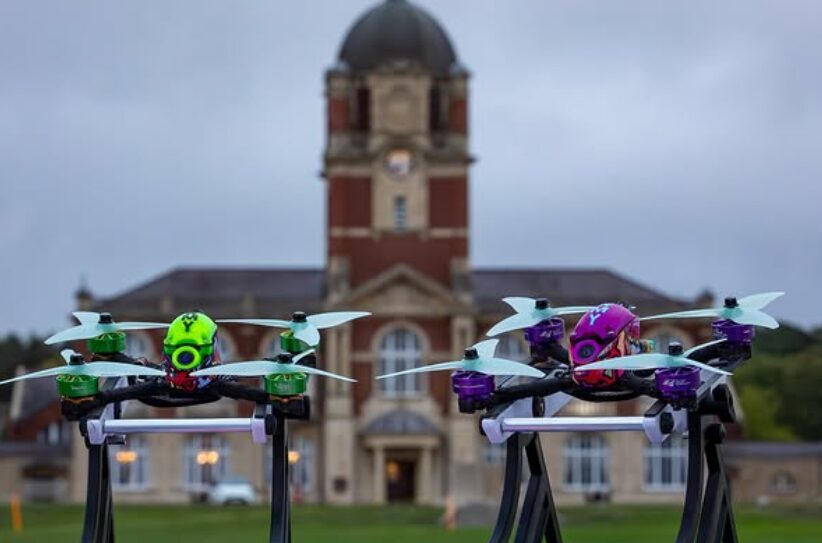
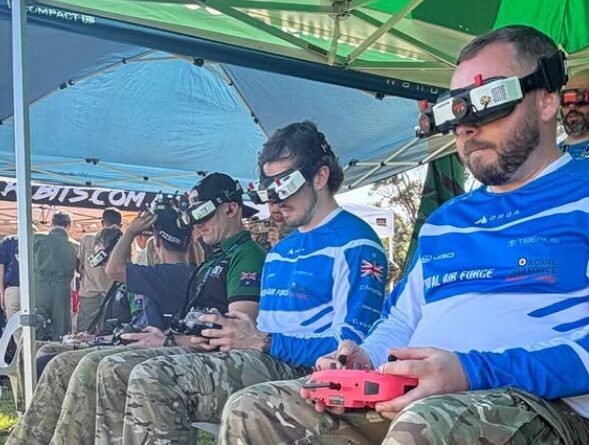
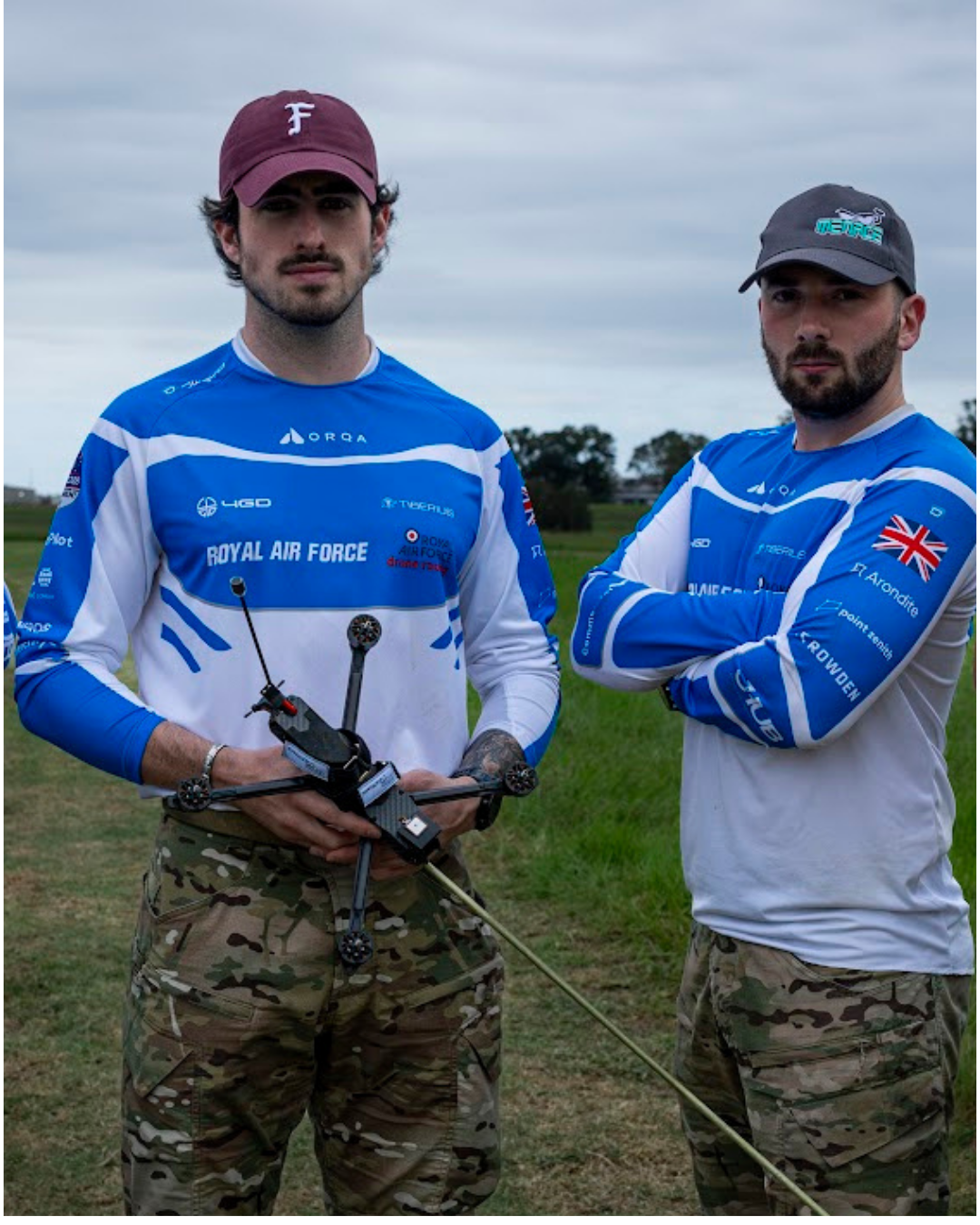
Members of the Model Aircraft Association’s Drone Racing team recently competed overseas for the first time at the Military International Drone Racing Tournament (MIDRT) in Sydney, Australia.
The annual tournament brings together international military teams and some of the world’s most skilled FPV pilots, showcasing the rapidly evolving nature of competitive drone racing on a global stage.
Known in competition as Fru, Witty and Gibbo, we caught up with the RAF drone pilots about the many transferable skills which make them better personnel and find out the importance of our charitable funding to their sport.
Cpl Newman Fruin – Pilot Name: Fru
“I originally got into drone racing while on deployment, where my sergeant gave me access to a few drones so I could practise flying. Like many, I could barely keep it in the air at first! My friend and I started competing against each other and found an old, abandoned farm where we would race in our downtime. This was when I really started to enjoy it and take it seriously, turning what began as informal practice into a genuine passion for the sport.
The financial support I have received from the RAF Central Fund has been instrumental in continuing my drone racing journey. It’s an expensive sport, and their Individual Sports Grant allowed me to buy spare parts which made a big difference. Without spares, breakages mean you’re out of action, so having the Fund’s support enables me to continue flying and stay competitive.
Drone racing has helped me develop patience, problem-solving, and mechanical understanding. Due to drones frequently breaking, you must learn how to fix them quickly and think on your feet under pressure.”
Sgt Michael Clough – Pilot Name: Witty
“I first got into drone racing in 2014 when my partner gifted me a toy-grade drone while I was preparing to go overseas. I wasn’t very good at flying it at first, so I started repairing and modifying it using skills I’d learnt in Phase 2 training. That led me into building drones from scratch during deployment downtime, learning through forums and YouTube to upskill myself.
I had to step away from the sport a few years later due to costs; however, my passion was quickly reignited when I joined the RAF Model Aircraft Association and through Project ARTEMIS at Brize Norton, which focuses on developing and deploying nano-drones for rapid, high-accuracy intelligence gathering.
Drone racing demands systems integration, troubleshooting, and root-cause analysis under pressure, often dealing with non-obvious faults that require logical isolation and reassessment. These are highly transferable skills for my role as a TG4 ICT Technician within the RAF.
Racing environments also sharpen my ability to remain calm and decisive under pressure, while competing internationally has opened the door to sharing knowledge and learning entirely different approaches to the same challenges. The sport drives constant learning and problem-solving, keeping me adaptable and technically current.”
L/Cpl David Gibson – Pilot Name: Gibbo
“Work and modern conflict really got me into drone racing. Being in the RAF Regiment and seeing FPV drones used on the front line in Ukraine raised a lot of thought about how warfare is changing and how we need to adapt. At II Squadron we started to bring it into training, while also keeping the racing side going as a hobby and as a way of representing the RAF.
Sydney was my first time abroad with the Association. It was a great experience working with partner nations and racing competitively, as well as doing tactical elements, which was new for most of us.
Other than benefitting from support that the Central Fund provides directly to the Sport Associations to enable overseas visits like Sydney to happen, I haven’t had to reach out for individual funding yet. However, it is reassuring to know that the Fund is there if I need it. I’ve heard excellent stories from people I know who have received support and how much of a difference it’s made to their sporting careers.”
Drone racing provides an exceptional environment for developing technical skills alongside a strong community ethos. For many, the combination of challenge and collaboration is what makes the sport so engaging and rewarding.
With continued charitable support and partner sponsorship helping to reduce financial barriers and improve access to specialist equipment and training, more personnel can participate in sport and continue developing their skills and potential.
For those interested in getting involved in drone racing, further information can be found at: www.rafcf.org.uk/sports/raf-model-aircraft or reach out via Facebook or Instagram.
Latest Posts

RAF Central Fund launches 2025 Impact Report
21st May 2026


Support the RAF Central Fund
You make our work possible. Your donation can change lives.
Support the RAF Central Fund and win £10,000 Cash
Your chance to win from thousands of £s worth of prizes every week whilst supporting your RAF charity and enabling us to fund sport and physical activities across the RAF.
See Stories
Max's Story: Taking on a mammoth cycle ride
There is more in all of us, we just need to want it, find it and use it.
Plane pull challengers at RAF Coningsby
Eight teams of six people took on the challenge of pulling the BBMF Dakota, which weighs over 17,000 lbs, over a distance of 92m – that’s the sum of the wingspans of each of the five aircraft types in service with the BBMF.